
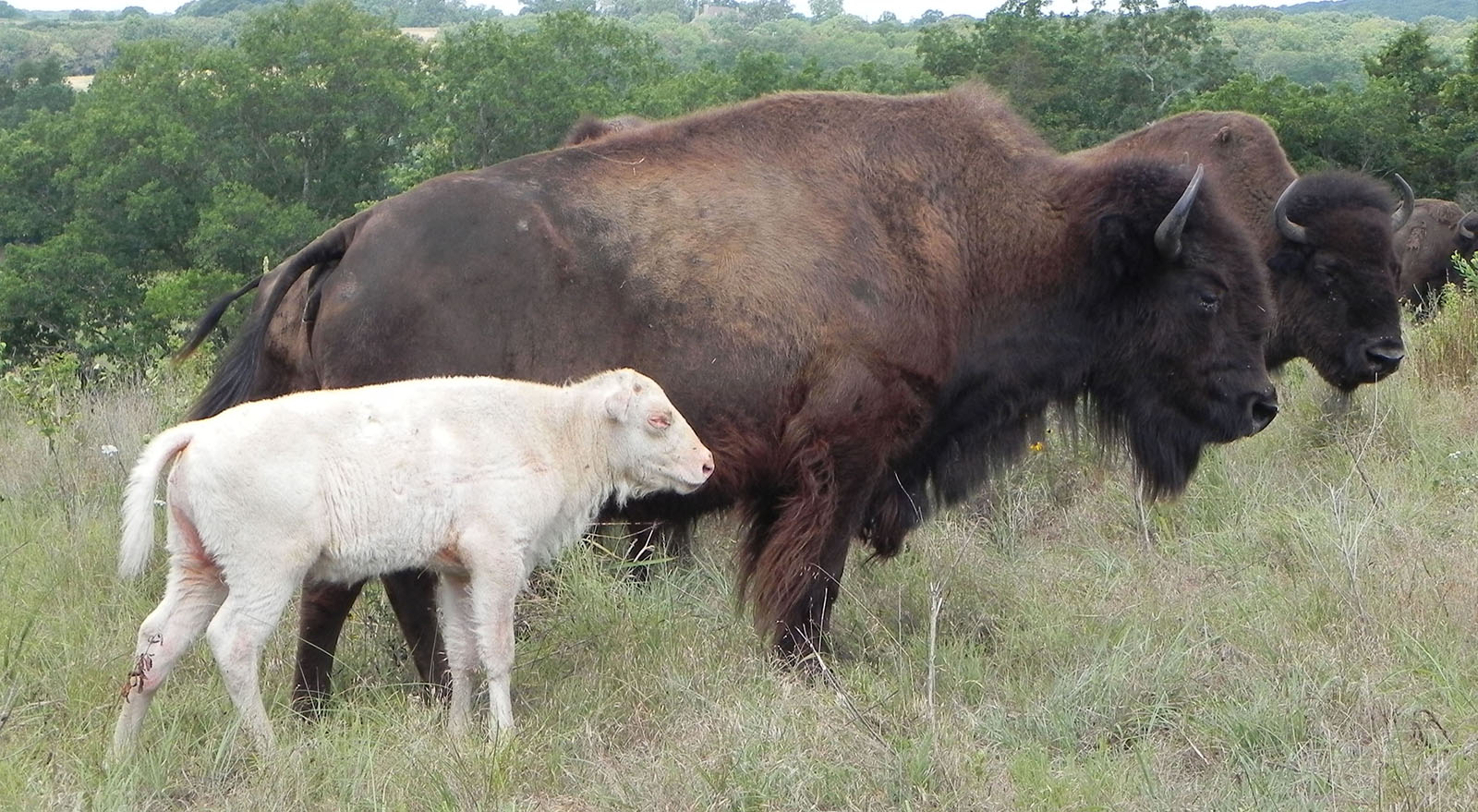

White bison are extremely rare.
In fact, the odds of an American Bison being white are about the same as correctly choosing all six numbers in a lottery, as the National Bison Association indicates the phenomenon occurs naturally in only about one out of every 10 million births (with higher rates resulting from selective breeding practices).
Texas County resident Colt Hamilton hit the bison jackpot when an albino female calf was born about five weeks ago on his property on Highway UU south of Houston. Hamilton is CEO of Hamilton Native Outpost (HNO) in the Elk Creek area of Texas County, a company that specializes in cultivating and selling seed from plants native to Missouri, as well as educating and helping people interested in ecosystem restoration and creation of wildlife habitat.

A few years ago, Hamilton began using bison for a very specific purpose that falls right in line with what HNO is all about.
“I always heard they were very selective and only ate grass and weren’t at all interested in the native forbes,” he said. “We grow hundreds of kinds of native forbes, which are flowers, and I used to spray fields with grass killer to keep the grasses out, because if they have the same size seed as the forbes, we can’t tell them apart.
“Now I’m using bison and not spraying these fields at all. They won’t pay any attention to the crops I’m after; they just eat the grass.”
Bison can end up white because of being albino, (and remain unpigmented throughout their lives), being leucistic (and having white fur but blue eyes due to one of a variety of conditions that result in the partial loss of pigmentation) or having a genetic condition that causes them to be born white, but to become brown within a couple of years.
Claims of white bison are nowhere near as rare as actual white bison. Hamilton said there are only four known examples, including the new addition in Texas County.
“There are thousands of white bison,” he said, “but most of them are crossed between Charolais and bison and then bred back to where they’re a sixteenth Charolais or that kind of thing. So they look like a bison, but they’re still not pure bred.
“As far as I know, this one is legitimate albino bison.”
Hamilton purchased 112 bison last spring from a man in the Bitterroot Mountains of Montana, including the white calf’s mother. He said the situation is even more amazing because the other three known examples are owned by the same Montana man.
“We’ve become pretty good friends through the bison,” Hamilton said. “I texted him about the calf and he came back with, ‘welcome to the club! Right now the club is just you and me!’ Then I said, ‘oops, that probably wasn’t supposed to happen,’ and he said, ‘no, I probably would have kept that one if I knew.’”
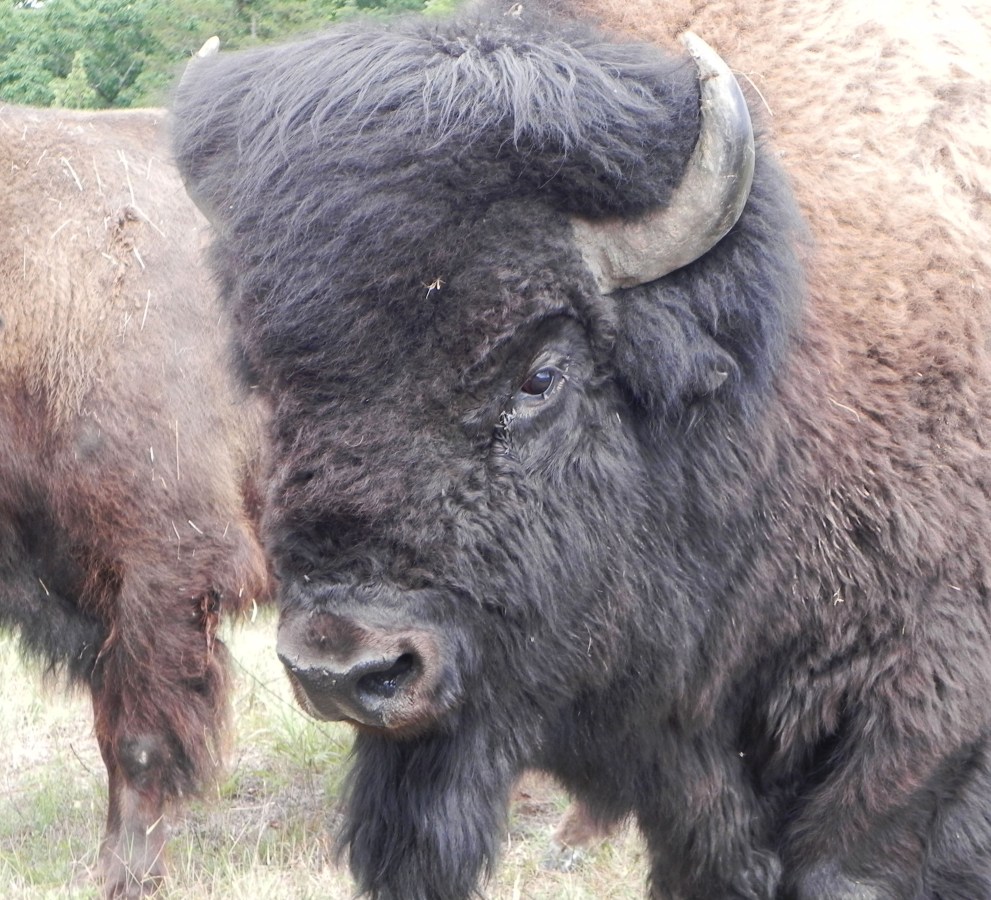
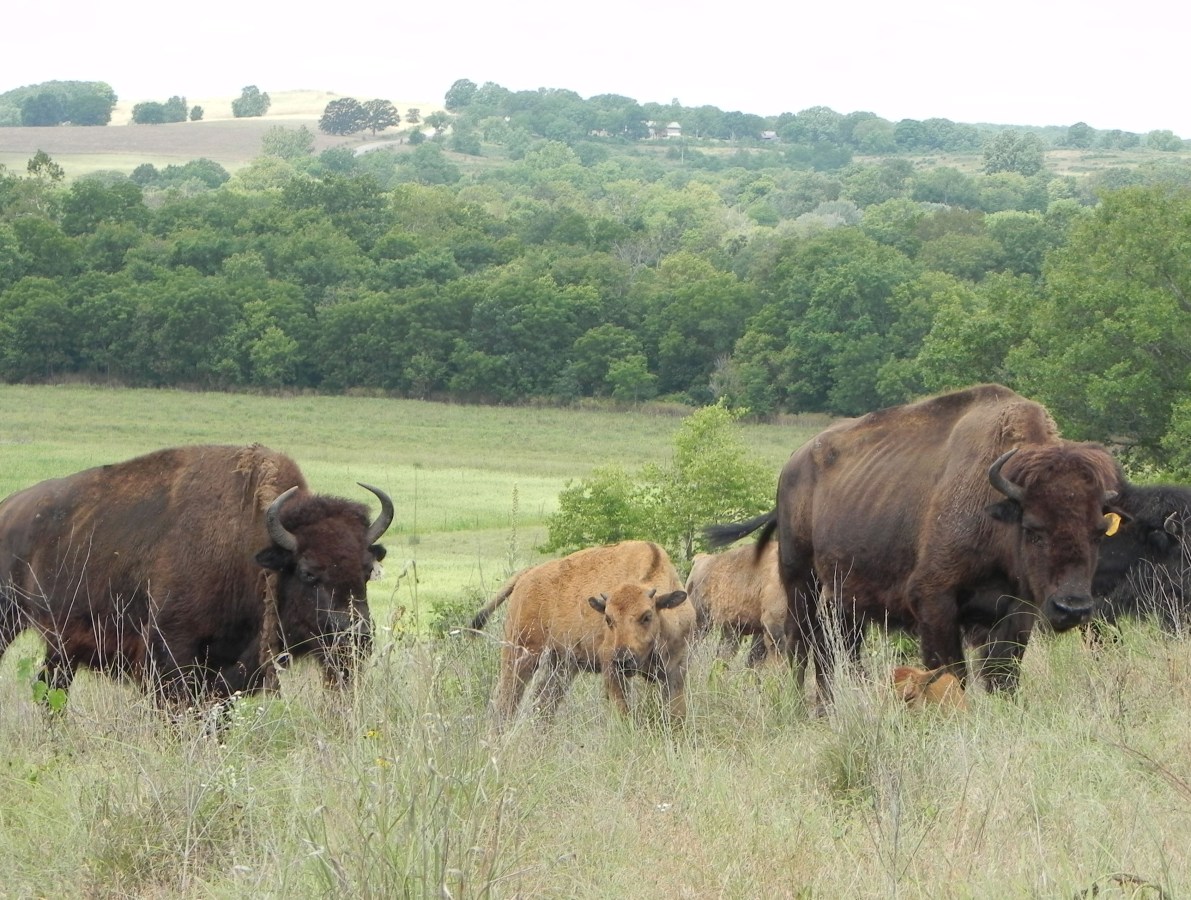
The calf’s mother is a 6-year-old cow who is part of a herd of about 35 head living on a 180-acre tract where multiple native forbes are grown. Hamilton has about 90 more bison on another tract and another 40 on a third property, including large, majestic bulls weighing in the neighborhood of 2,500 pounds.

So far, the calf is eating well and filling out well, and the mother is taking good care of her little girl.
“She took right to her,” Hamilton said, “and she’s just part of the herd. When you see her, you can tell how that would stand out on the prairie, with a thousand brown ones and one white one.”
Some Native American tribes considered white buffalo to be a good omen, while others saw them as a bad sign. Among those on the positive side were the Sioux, Cherokee, Navaho and Lakota, who similarly held the sacred story of the White Buffalo Calf Woman in high regard. Basically, she appeared and offered valuable teachings, and when she left, she promised to one day return and restore harmony and spirituality to a troubled world.
“I like the restoration part of the story,” Hamilton said, “because that’s such a big part of what we do.”
Hamilton said he wouldn’t be surprised if leaders from various Native American nations get in touch with him about organizing a white bison calf gathering.
“A lot of times when they find out about one, they come and there’s a big naming ceremony that can last for days,” he said. “We haven’t named it yet; we’re kind of waiting to see if they want to.”
Although they’re members of the bovine family, bison don’t bawl like a cow, but vocalize with a grunt, almost like a hog. Hamilton said they’re highly intelligent animals with long and sharp memories.

“And if you treat them with respect, they’ll have respect for you,” he said, “but if you break their trust, they will disrespect you. They can run up to 40 miles per hour, so you aren’t going to outrun them. But I move mine on foot, because they feel they can have that trust.”
To tend to peoples’ interest in the white bison calf, HNO personnel will post YouTube videos online providing updates on it.
“We would love for people to follow it on YouTube,” Hamilton said.
HNO now offers seeds from about 130 plants native to Missouri. The company’s website and Facebook page also offer detailed information and insight about habitat and acreage restoration, and other related video clips.
The phone number at HNO is 417-967-2190.






Thanks for the nice article, Doug. I really enjoyed the time spent in the field with you. – Colt