
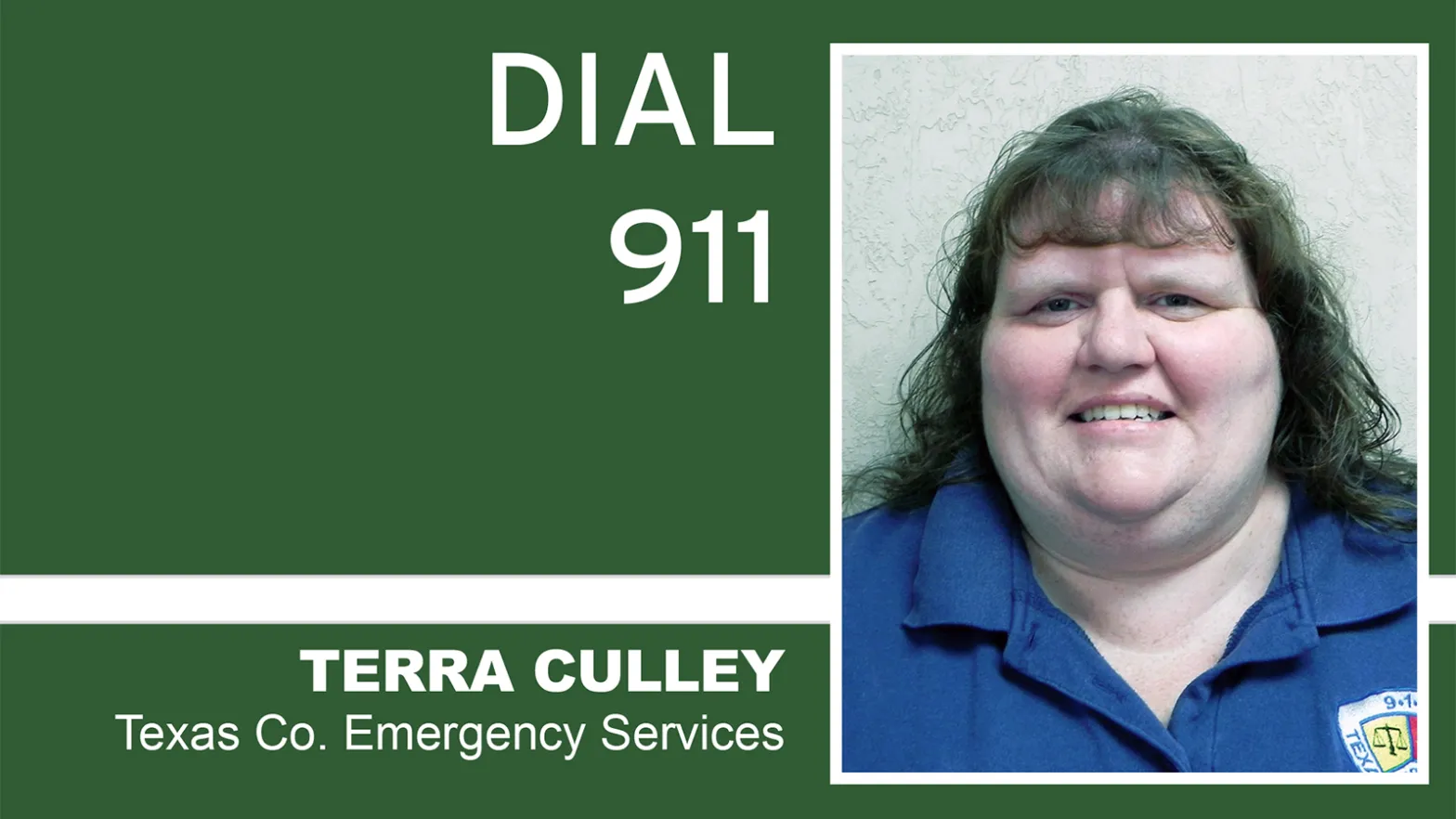

Throughout the years, I have been asked many questions pertaining to different aspects regarding 9-1-1 and dispatch. Most of them begin with “Why.” Here are a few that are the most repeated, along with some explanations.
Why do you ask so many questions?
Along with obtaining location information, dispatch is building a picture from words and translating that to the responding units. This allows dispatch to help while on the phone and field units to be as prepared as possible without being on scene.
Why can’t you just let me talk to an officer/deputy?
We are a dispatch center with that, personnel from other agencies are not in our building. They are responding to calls or handling priority issues. When a call comes in for just a question your name, phone number and a reference will be asked. Dispatch will also ask what agency it is regarding or your location to get the question to the correct department.
Why don’t you just get here?
There are some that believe that our 9-1-1 dispatchers take the call, hangs up then responds. However, dispatch takes the call, gathers information, then sends field responders. Depending on the situation or emergency, the responding units may be dispatched while the caller is still on the phone and a dispatcher will continue to talk to the caller providing pre-arrivals and help while relaying updated information as needed, until someone is on scene.
Why isn’t the fire department here yet?
All the fire departments in Texas County are volunteer-based. They do not have manned stations 24 hours. When a call is received for a fire department, once the location and type of event has been identified the department is notified. However, for most departments, the firefighters must leave home, work or personal events then respond to the fire house before responding to the fire scene. I encourage anyone that would like to help your local fire departments, check with them. There are many things to help with, not just fighting fire.
Why are you even answering the phone if you can’t answer my question?
If your questions are about a medical condition, no one can diagnose it over the phone. Dispatch will always offer to send EMS or advise you to call your family physician or respond to the emergency room. If your questions are about a legal matter, your information will be asked for then given to the correct law agency. There will be a call back or a response from an officer or deputy.
Why isn’t the ambulance here yet?
Texas County is the largest county in the state of Missouri with 1,179 square miles to cover. The EMS crews are some of the best around. They are responding as fast as possible, however, there are many miles of rural highways and roads. There also is not an endless supply of ambulances. If an ambulance in the Licking area is already responding to an emergency call, then the next closest ambulance is dispatched. There are times when multiple emergencies happen in very close proximity. When this happens the surrounding EMS agencies are contacted to respond. Thankfully, each surrounding area has helped a neighboring department when they could. This does add response time to their drive but rest assured dispatch has called, searched, and contacted the closest one.
Why does anyone stay in this career with all the stress and disrespect from all angles?
This question may surprise some, but it is true that emergency dispatch is not recognized as first responders or even thought of be part of the scenario when any type of emergency has occurred. Most think that dispatch just answers a phone and says, “OK, we will send the heroes in.” Dispatch may not be physically on scene, but they have notified the correct agencies, talked with the reporting party through a crises or asked lifesaving questions and provided pre-arrival instructions. Pre-arrival instructions include instructions for CPR, choking, burns, trapped in a burning building, bleeding control, what to do for a car accident victim, lost children, domestics, shootings and endless list of others. Dispatch has seconds to respond to that voice asking for help. They are listening to the callers and relaying the information to the responding departments to help them to be prepared. Dispatch has the responding units’ safety at the forefront along with any callers. Are there any weapons, violet situations, or hazards that need to be relayed? Dispatch will stay on the phone until help is physically on scene, then disconnect the call, unless it is deemed that they should not.
This does not mean that dispatch is completed with the call. Now it turns to the field responders on scene; are they safe, do they need anything? Have they answered a status check? Or it could be that it is a scene where the field responders need more assistance and request dispatch to send helicopters, police, search dogs, more personnel, another ambulance. Anything that responders on scene request dispatch is responsible to notify. This could be a dozer, a boat or other outside departments. If it is a scene that will be ongoing, food and water has been requested. The list of possibilities is endless.
Unfortunately, not all emergencies happen one at a time. There may be a car accident, house fire, field fire, heart attack all happening within the same time frame. Including traffic stops, wrong number calls, hang up calls, questions for law or someone reporting their electricity is off. Every time you see an emergency vehicle respond; dispatch has been involved. They must keep information documented and follow along with each call until the last field responder has left the scene and is back in service.
Back to question of “Why.” The best answer I can give for that would be purpose. Those who don’t find purpose in this career usually does not stay. This is one of the few careers where one helps with multiple life threating scenarios each shift. This is also a career where one can be involved in a lifesaving moment each shift. Even if just one life has been saved or helped, that is purpose!
The Texas County Emergency Services office in Houston is funded by a 3/8-cent countywide sales tax approved by voters in 2013. Director Terra Culley can be reached by phone at 417-967-5309 or by email at terraculley911@hotmail.com.
