

I’ve found most of the problems with small engine powered equipment are due to fuel-related issues.
Common things are debris in the fuel tank and not using stabilizer in the fuel during the off-season.
Regarding the first item – trash in the fuel tank – I have found that most foreign material gets into the fuel tank during refueling. Before adding fuel to your mower, chainsaw, trimmer or other piece of power equipment, use compressed air to blow the surface surrounding the fuel cap, or at least wipe the area with an old towel before removing the fuel cap. Otherwise, bits of grass, dirt or whatever get into the fuel system and clogs filters, lines and the carburetor, resulting in hard-starting and poor performance. It can eventually cause a trip to a repair shop and probably a $75 to $100 repair bill.
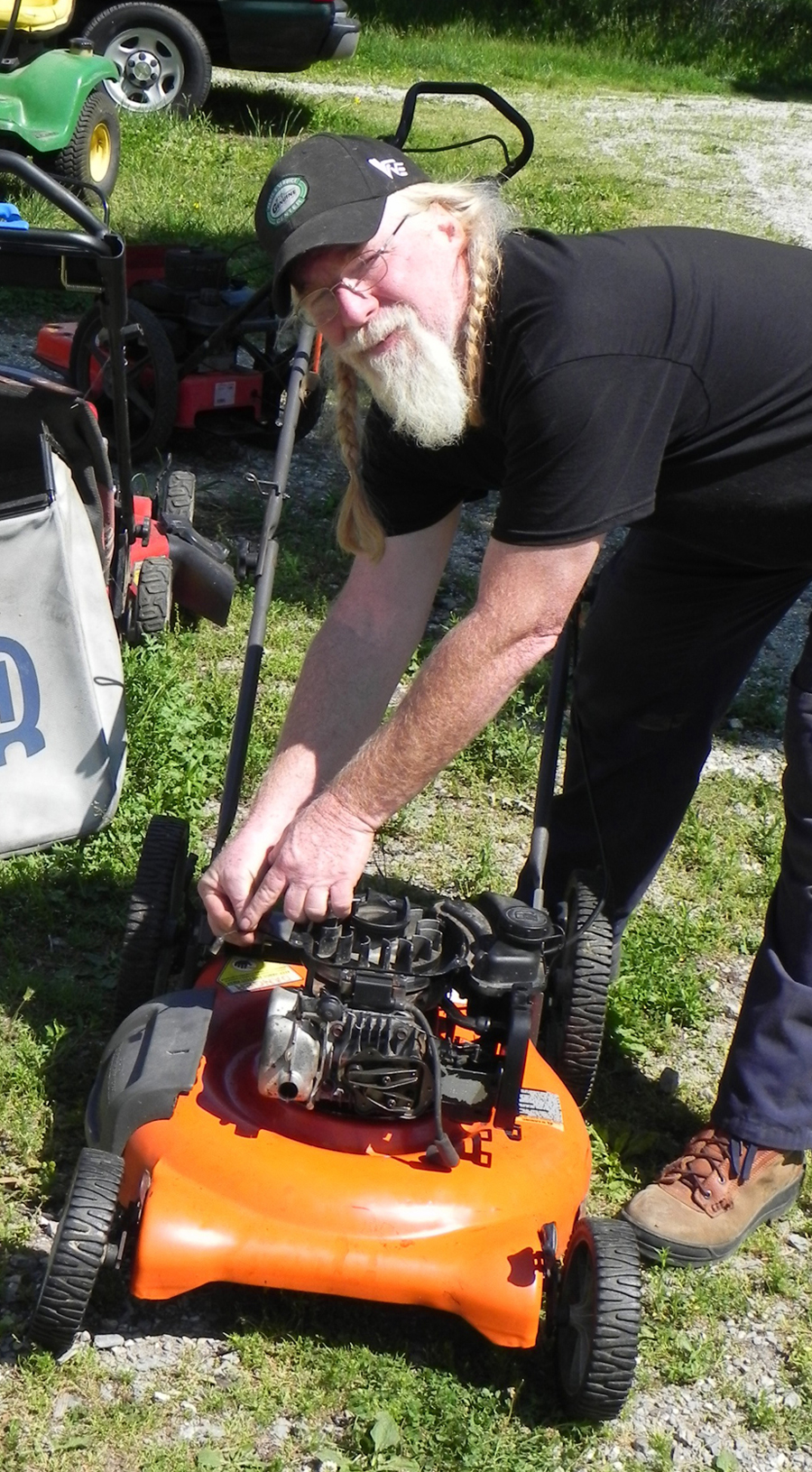
Herndon Sales and Service owner Keith Ford points at the lawn mower spark plug wire that burned because the mower couldn’t “breathe” properly due to improper maintenance.
Next is the issue of using stabilizer in your fuel. This applies more to long-term storage of power gear, including when it sits unused during the off-season.
For instance, in the late fall you put your mower up for the winter and the untreated gas sits in the tank. As time passes, condensation builds in the tank and sinks to displace the gas at the bottom of the tank. The ethanol in the fuel reacts with the water and gas additives and often creates a green slimy gel that is highly corrosive to the fuel system. Also, it clogs the carburetor and prevents gas from getting to the engine.
Again, a trip to the repair shop for the $75 to $100 repair often results.
Simply adding products like Stabile and Seafoam to your fuel and ensuring the tank is full when placed in storage will eliminate the majority of fuel-related problems.
Also, using 91 octane gas will help reduce fuel problems. And about the gas: Most stations now have three grades of it at the same pump. What is best is to run the first three gallons into your car or truck then fill your gas can. Otherwise you are going to get the grade pumped by the person before you, and you may even be paying for 91 octane but getting 87 octane. And the 87 is usually 10-percent alcohol.
I know that high octane is about 25 cents more per gallon, and stabilizer and Seafoam are rather pricy, but spending that extra few dollars will save you that expensive repair bill along with the effort of dropping of and picking up the unit and the time you must wait for the repair to be completed.
For 2-cycle engines, True fuel is an excellent product. At the end of the season, use up or dump out the gas in the tank. Pour in about a cup (8 ounces) of the appropriate mix, and run the engine for 10-15 minutes. Then put the tool away, and next season it should start up and operate with minimal to no problems.
Again, True Fuel costs a few bucks, but one can will treat 4-to-6 saws, trimmers, cultivators or whatever, but $6 a can is much cheaper than a $75-plus repair bill. Also, keep in mind that manufacturer’s warranties don’t cover fuel-related problems.
Houston resident Keith Ford is a retired infantryman and an amateur writer who owns a small engine repair business in Texas County. Email kf4tap@yahoo.com.