

September is National Preparedness Month.
This marks a great time to practice family plans and update contact lists along with other information you may need. Once upon a time 9-1-1 was a number that was only dialed in a life-or-death emergency. Through the years it has become a number that is overused for general questions. Questions that could be answered by another agency or entity.
A few questions to think about and add to your family plan include:
Where does the family meet when the house must be evacuated quickly?
If it is a house fire, does everyone know to meet at a certain spot after getting out of the house and not to go back inside under any circumstances?
Where will you go if a tornado is threatening the area?
Where will your family meet up if any emergency or disaster happens?
Where are the warming stations or safe rooms/building for your area?
Do your children know your name not just by your title such as mom, dad, grandma and grandpa etc.?
Have you updated your family medical history, such as new medications or new diagnosis? Is it documented in a safe place you can access at any time?
What about your pets? Where will they go? Do they require medication?
Phone numbers to save:
The electric, water, sewer, internet, cable and other services that you have. Along with the phone numbers. Some utility companies may need your account or location number.
City hall, or entities that are responsible for community events such as parades, carnivals, derbies or firework displays.
One of many ways to keep information at your fingertips is to email yourself this updated information on a regular basis. Phone numbers can be stored in most cell phones with a note attached with the account numbers etc. If email is not possible, another suggestion, if you feel it is safe to do so take a picture of the information to keep on your cell phone camera roll.
9-1-1 emergency does not keep a community calendar for the many events throughout the county. Nor does 9-1-1 possess special powers to make the utility companies work faster or respond to one house before the other. The best way to have utilities restored is to contact your provider to let them know of your outage. If you have reported it, then it is on their list. Calling 9-1-1 before or after you have reported it does not make the repair any faster. However, by calling 9-1-1 with utility issues may delay emergency response to someone with a true life and death emergency. The few seconds it takes to answer your call and explain how you must contact the utility company could be the three seconds that delay sending the ambulance to save a patient with no heartbeat. When there is a major incident, dispatch is busy; calls are attended to in a priority manner. There are certain circumstances that calling 9-1-1 for no power is an emergency. If someone in the home depends on electricity for oxygen or something of this matter, a call to 9-1-1 may be in order. 9-1-1 cannot assist in turning the power back on quicker but an ambulance can be dispatched to your location if it is deemed necessary.
The Electric companies are top notch in response times. Intercounty for example is responsible for over 6,000 miles of live wire daily. They have technicians on call in each service area 24/7. If it is a widespread issue, they call in extra help to restore service as quickly as possible. The city utility workers also have personnel on call 24/7 and are very quick and precise to respond to any outages.
Texas County is a large land area. Over the years one of the things that have proven true over and over is that this county is community minded. When the need arises, all hands are on deck with no question. The fire departments in the area work with little to no budget. They have spent many hours training and helping the community on their own time. No disaster is scheduled and can happen any time, these departments’ personnel may have worked their regular day job and then stay up all night helping those in need. I have witnessed many of the law enforcement and EMS stay on extra hours or responding while off duty; helping nonstop until all is taken care of.
Dispatch may not be out on the ground or physically on scene, but they are definitely in the mix of it all. As other first responders are eager to help, dispatch is no different. They are checking in or responding to dispatch to help take the extra calls, radio traffic or just providing the current shift a break.
Being a dispatcher, telecommunicator, call taker, calm voiced hero, dedicated First Responder takes a special skill that only a select few possess. Each day they have the routine calls, a dispatcher’s routine calls are on most days an ordinary person’s worst day. Along with the routine calls there are many emergency events that involve many departments and emergency personnel. Certain times there are all the many emergencies and routine calls with special events such as five tornadoes in an hour, or flooding throughout the county within only a few minutes. Maybe it was a dangerous fugitive on the run and dispatch is helping keep track of many field responders and sending additional help. Customer service is a huge part of dispatching, however within dispatch the definition of customer service does not include ‘the customer is always right’. Difficult lifesaving calls and decisions are made every day. Including in some of those decisions are dispatch having to inform someone that the call that you just made to 9-1-1 is not an emergency and they will have to release the call for an incoming emergency call.
Having to release a call does not happen often for the most part if dispatch has time, they are happy to direct you to who and where to call if they know. If at any time you are not sure if there is an emergency, but it could be, do not hesitate to call. However, I encourage you to reconsider dialing the numbers “9-1-1” if after the dispatcher ask, “where is your emergency?” and your response is going to be “this isn’t an emergency, but…”
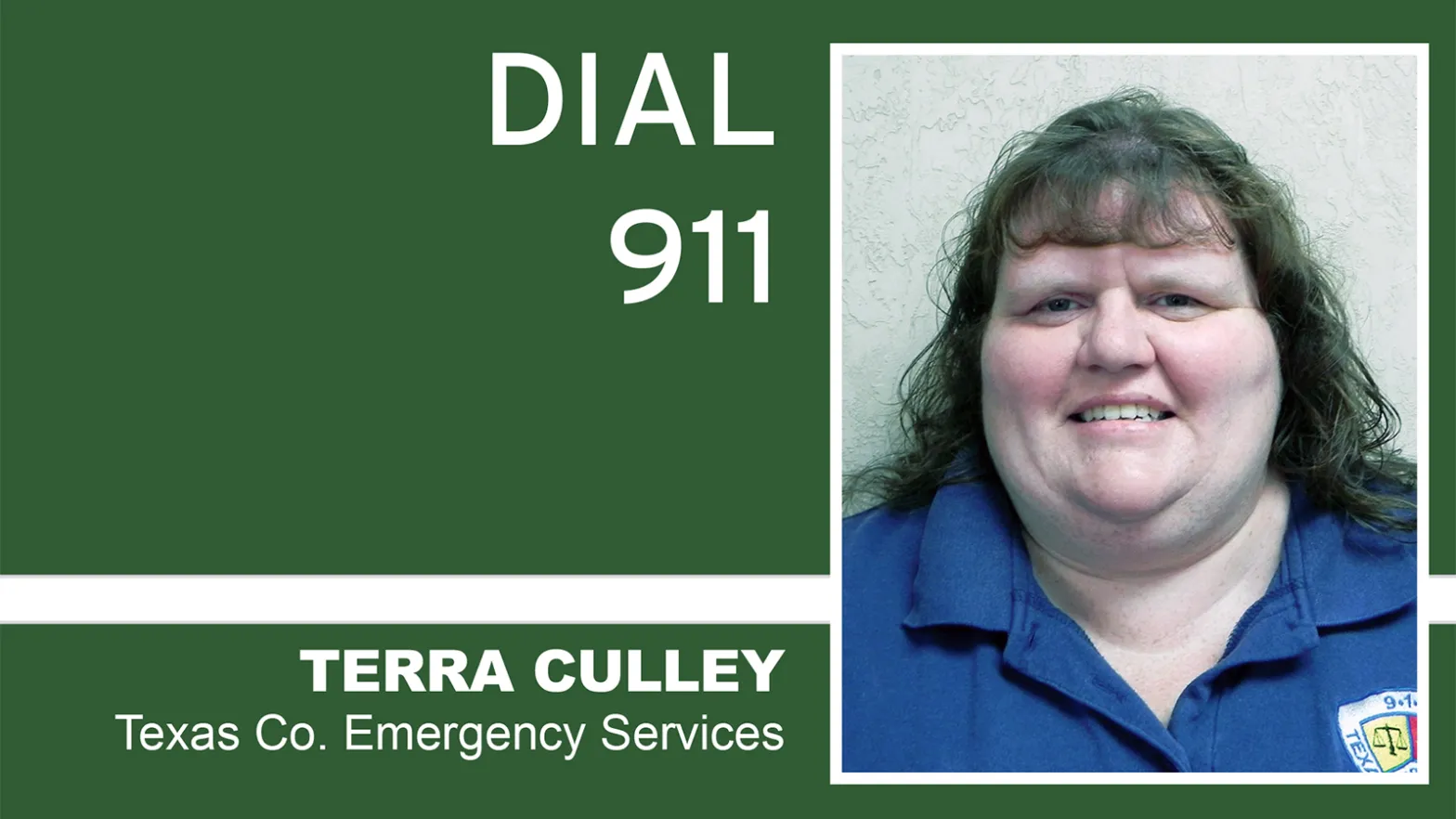
The Texas County Emergency Services office in Houston is funded by a 3/8-cent countywide sales tax approved by voters in 2013. Director Terra Culley can be reached by phone at 417-967-5309 or by email at terraculley911@hotmail.com.
